Are Your Tires Ready for the Road Ahead?
Your tires do a lot more than simply keep your vehicle moving. They play a major role in how your vehicle handles, how quickly it can stop, and how well it maintains traction when road conditions aren’t ideal. And as we head into fall—and eventually another Iowa winter—knowing the condition of your tires becomes even more important.
The tricky part is that tire wear happens gradually. You may not notice a major difference from one drive to the next, but over time, worn tread can significantly reduce your vehicle’s ability to grip the road, especially in rain, snow, and other slick conditions.
The good news? Your tires can tell you quite a bit about their condition if you know what to look for.
What Does Healthy Tire Tread Look Like?
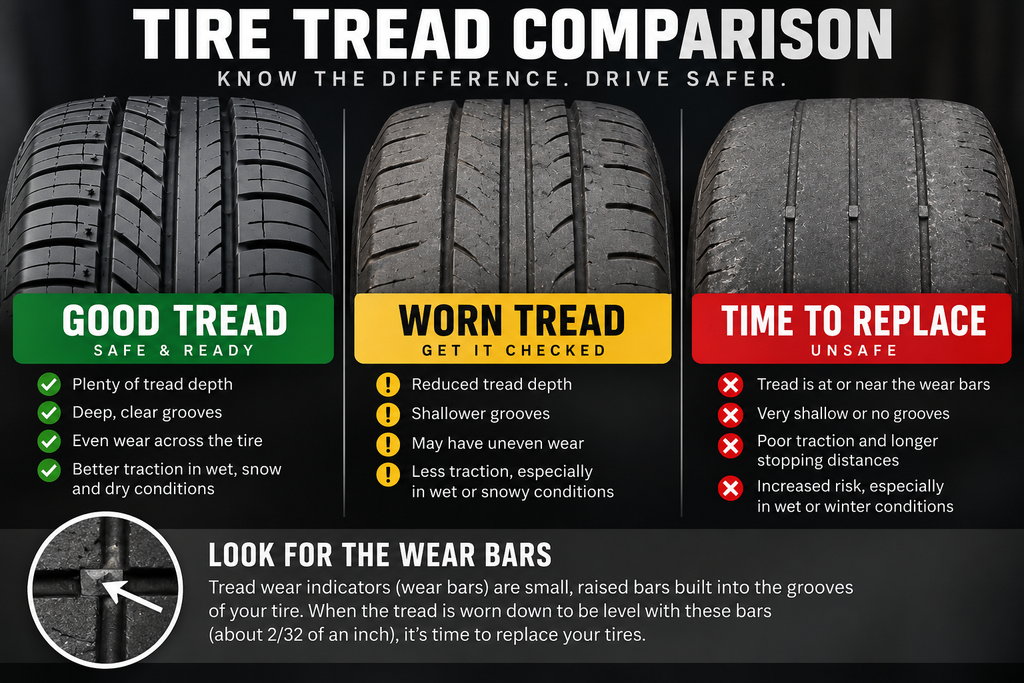
A tire in good condition should have plenty of visible tread depth with relatively even wear across the tire. Those grooves aren’t just there for looks—they help move water, snow, and slush away from the tire so the rubber can maintain better contact with the road.
As the tread wears down, those grooves become shallower and the tire has less ability to do its job effectively.
When Does Worn Become Too Worn?
One of the easiest things to look for is your tire’s tread wear indicators, sometimes called wear bars. These small raised bars are built into the grooves of the tire. As the surrounding tread wears down and becomes level with those bars, the tire has reached approximately 2/32 of an inch of tread depth—the point where the tire is considered worn out and should be replaced.
But you don’t have to wait until your tires are completely worn down before paying attention.
If you’re noticing uneven tread wear, cracking, bulges, exposed cords, repeated loss of air pressure, vibration while driving, or noticeably less traction, it’s worth having your tires inspected. Some of those issues may indicate a problem beyond normal tread wear, and visible damage shouldn’t be ignored.
And then there are the tires that make you look at them and think, Yeah…that’s probably not good.
Trust that instinct.
Why Check Them Before Winter?
Fall is a great time to take a closer look at your tires because the amount of tread you have left becomes increasingly important as road conditions change.
A tire that seemed perfectly manageable on dry summer pavement may behave very differently when it’s trying to move water, slush, or snow out of the way. Waiting until the first slick morning to discover that your tires have lost more traction than you realized isn’t exactly ideal.
If you aren’t sure how much tread you have left—or you see something that doesn’t look quite right—have them checked. It’s much easier to address a questionable tire before it becomes an emergency on the side of the road.
Worn Tread Means Longer Stopping Distance
Worn tread doesn’t just affect how your vehicle grips the road—it can also affect how quickly you’re able to stop. As tread depth decreases, your tires become less effective at channeling water away from the road surface, increasing the risk of hydroplaning and reducing traction on wet pavement. When traction is limited, your vehicle may need significantly more distance to come to a complete stop. Add rain, snow, ice or slush to the equation, and those extra feet can make a big difference. Good brakes can only do so much if your tires can’t maintain a solid grip on the road.
October at The Repair Companies Shop: Tires at Cost
If your tires are telling you it’s time for a new set, October is a pretty good time to listen.
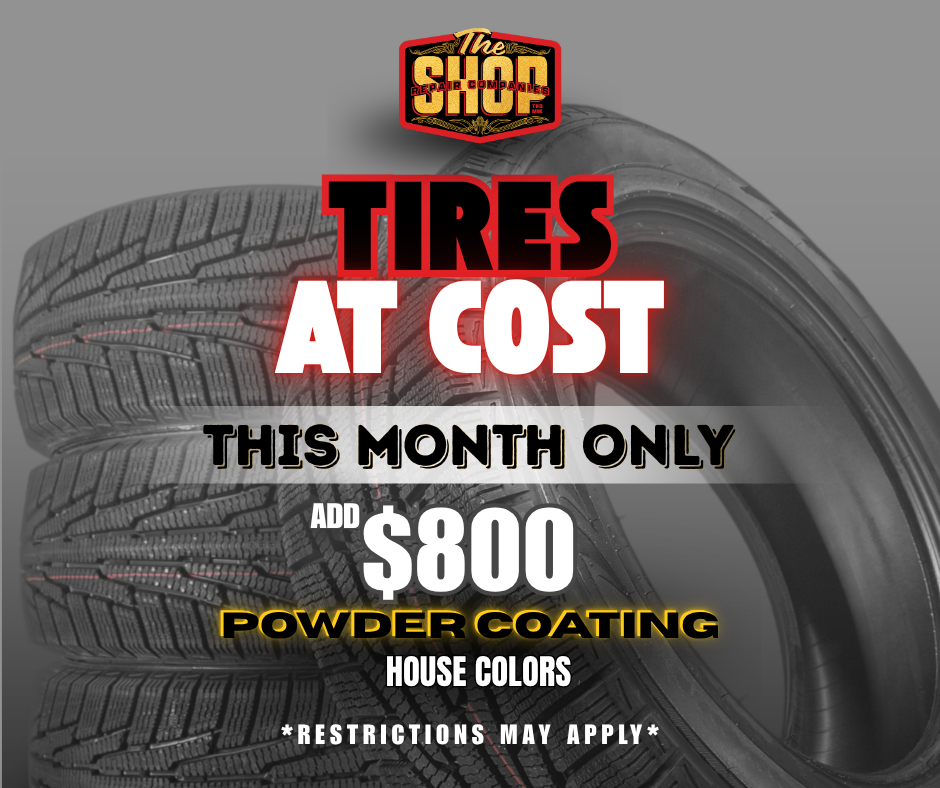
For the entire month of October, The Repair Companies Shop is offering TIRES AT COST.
Whether your current tires are worn out, you’re preparing for winter driving, or you’ve simply been putting off replacing them, this month’s promotion is an opportunity to get your vehicle set up with the tires it needs without the usual tire markup.
And if you’re looking to change up the appearance of your wheels while you’re at it, we’re also offering Powder Coating for $800 for House Colors during October.
Not sure what condition your tires are in? Stop in and let us take a look.